LOFT by 13x Audio / Coming November 2026
In time.
In key.
A free vintage house reverb plugin, coming in November. Its tail moves with your groove, rings in your key and makes room for every kick. Join the list and get one email when it’s out.
Free · VST3 / AU · macOS / Windows · November 2026
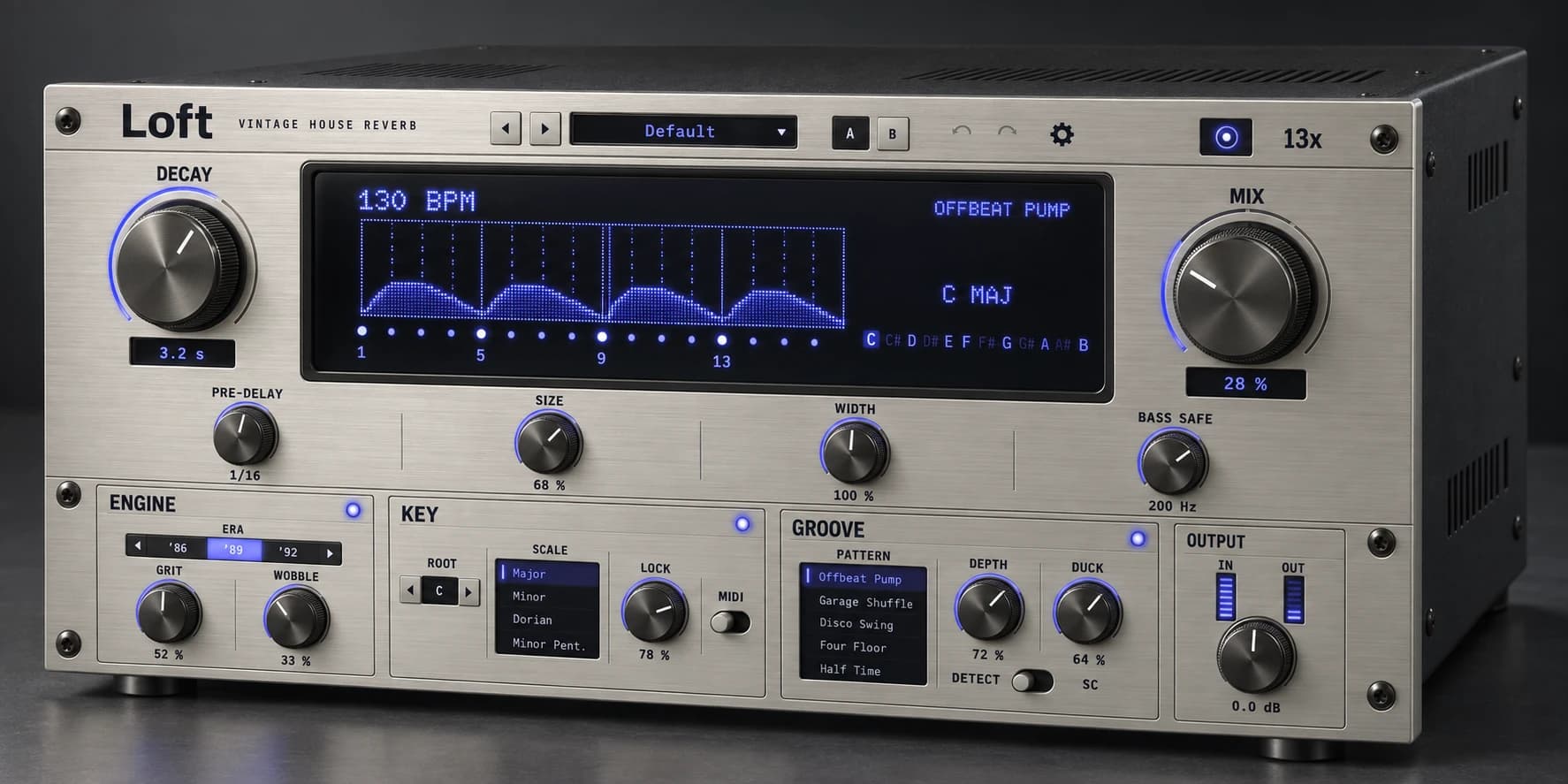
- Engine
- ’86 · ’89 · ’92 converters
- Key
- 60 tuned resonators
- Groove
- 5 patterns, host-synced
- Duck
- Detect or sidechain
What it is
Most reverbs sit still. LOFT plays along.
Every bar, GROOVE shapes the tail to one of five house patterns, locked to your host’s downbeat. KEY sends it through sixty tuned resonators so it rings in the song’s key, or in the chord you’re holding. DUCK clears it out of the way of each kick.
And ENGINE runs the whole room through the converters of a budget rack reverb from ’86, ’89 or ’92: lower sample rates, fewer bits, no dither. The grain you remember, on a dial. And FREEZE holds all of it, while the groove keeps it going.
Groove
The tail keeps time.
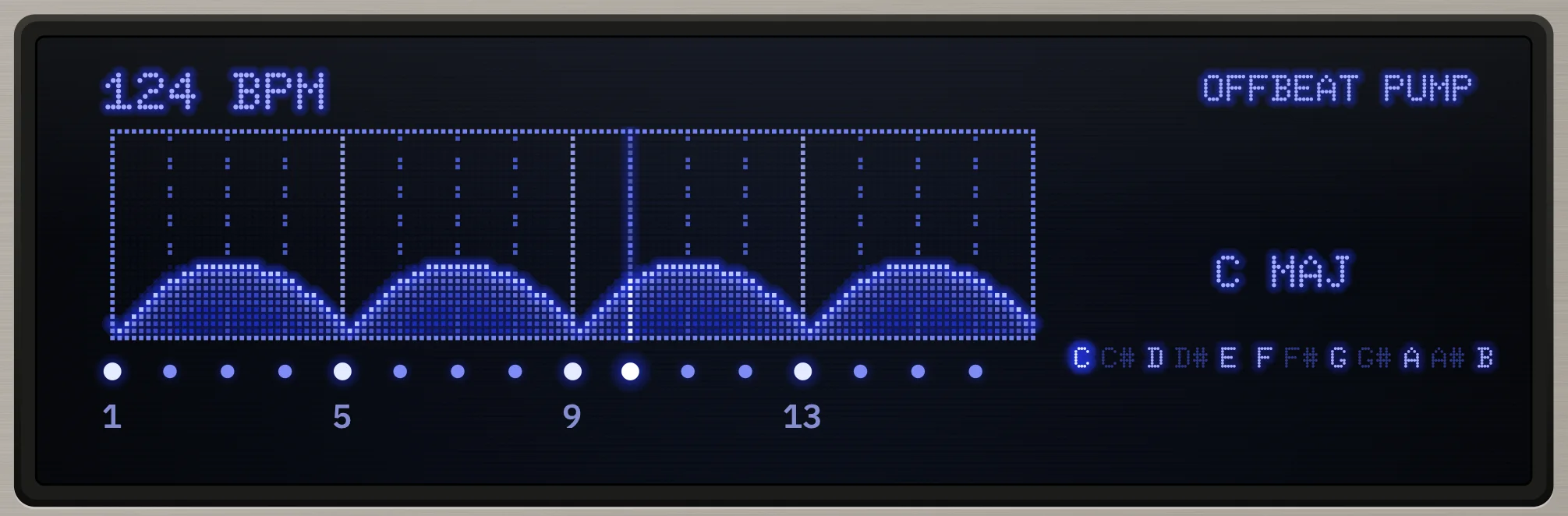
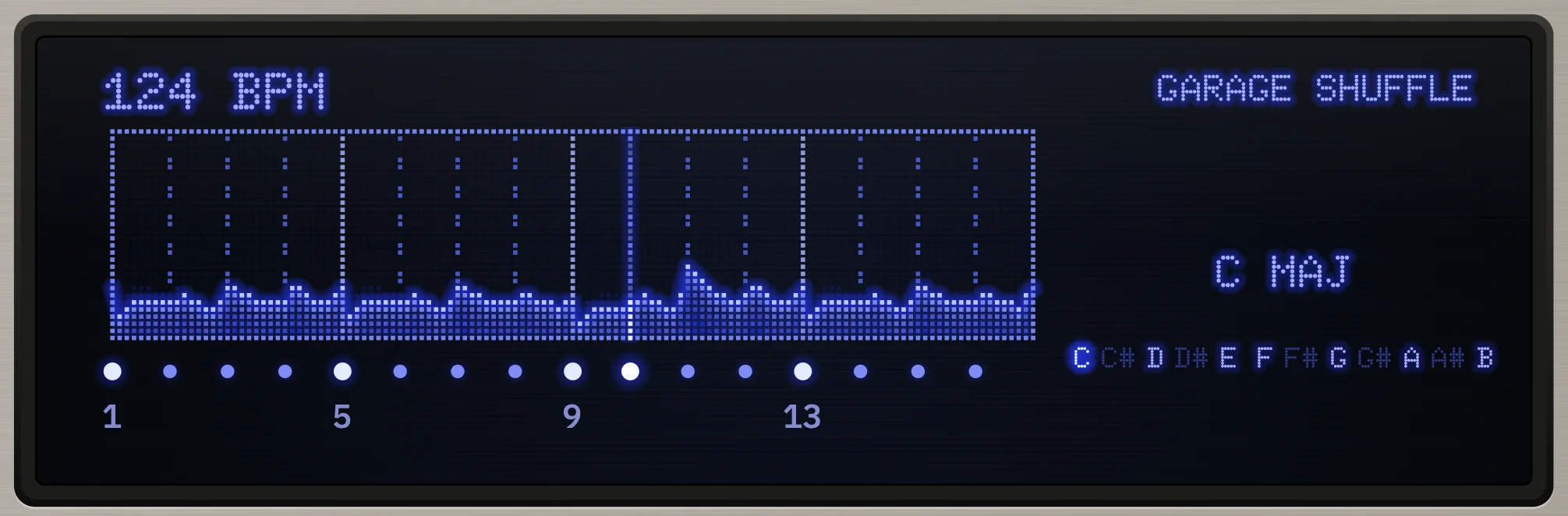
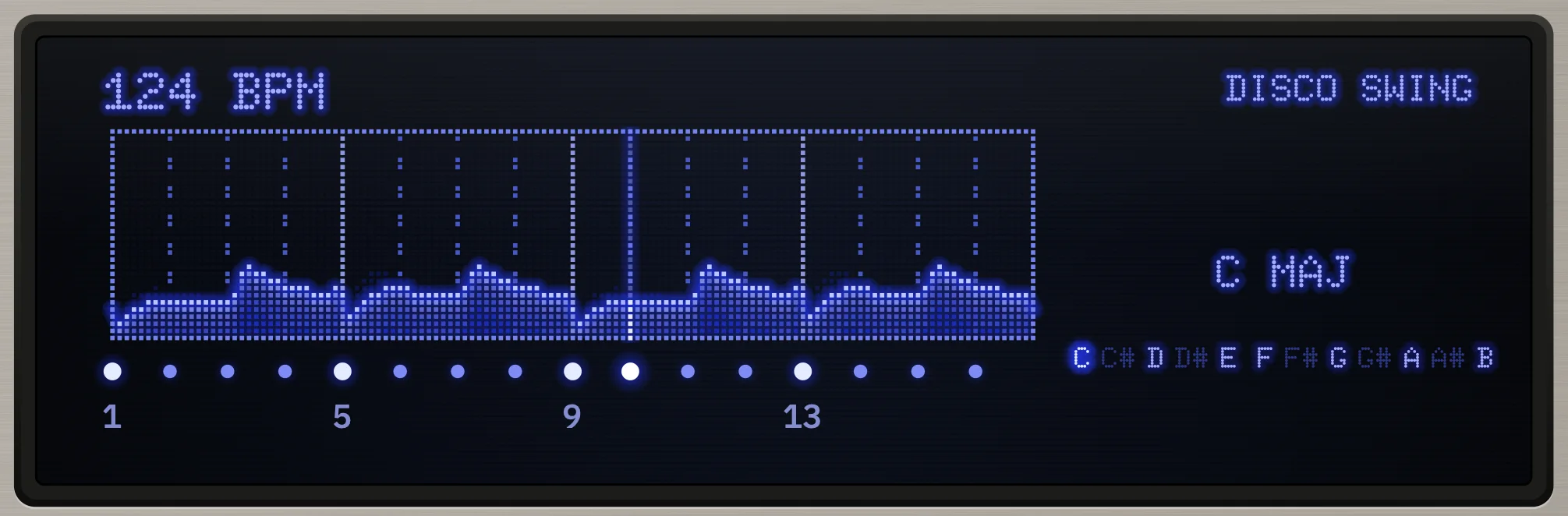
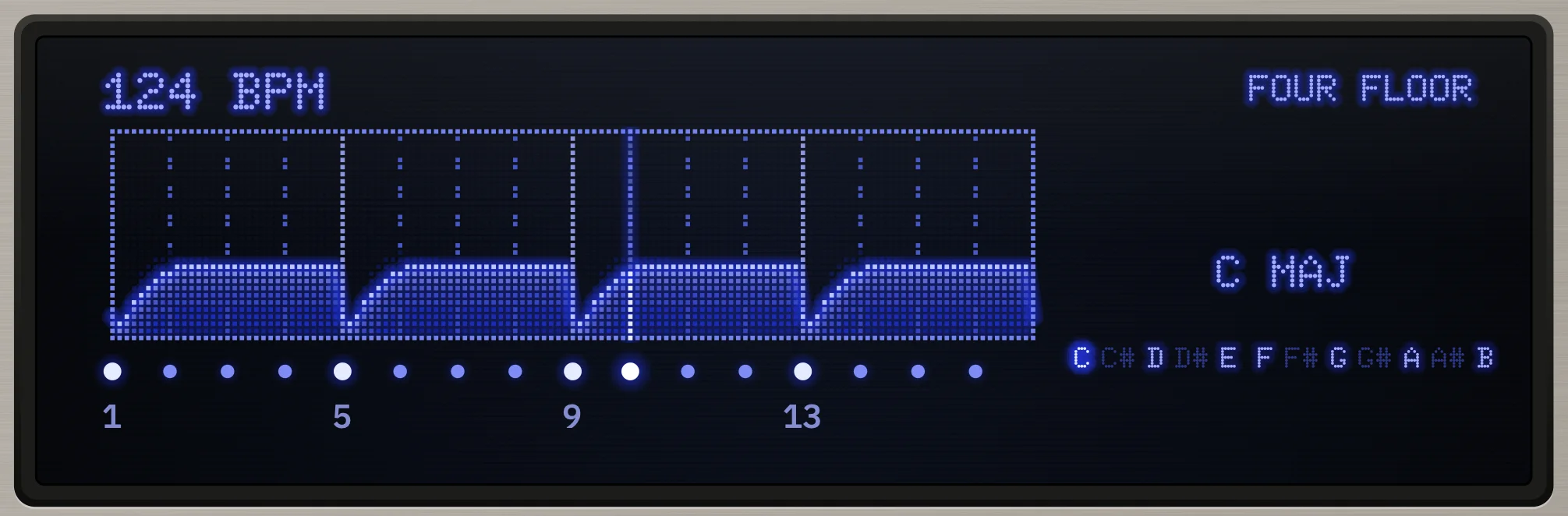
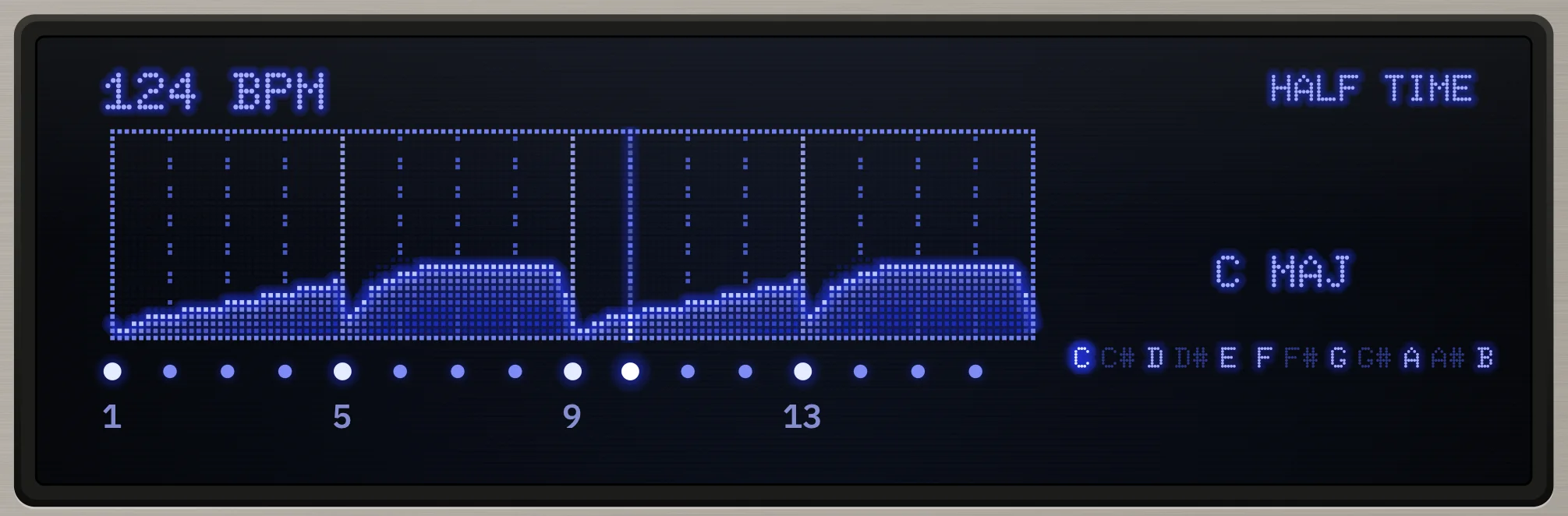
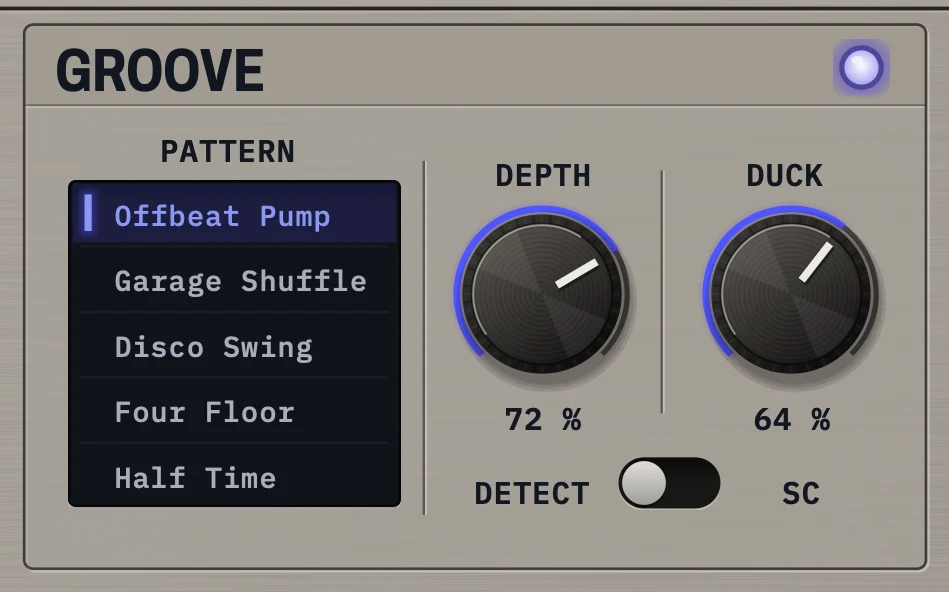
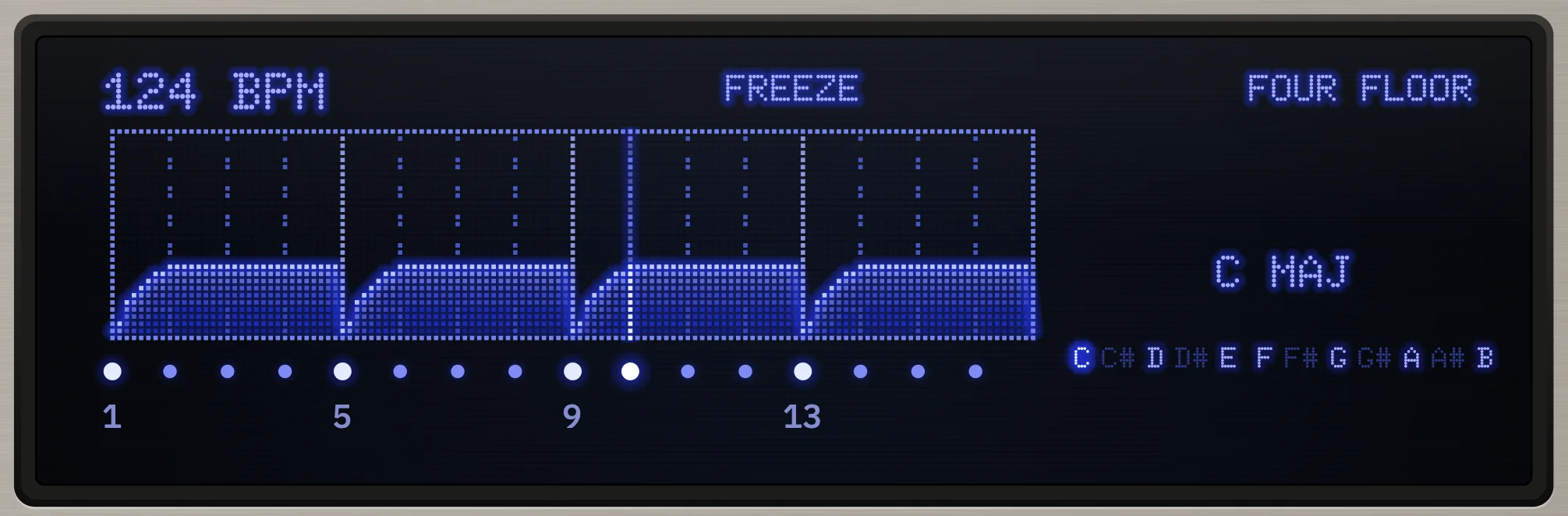
GROOVE shapes the reverb to one of five patterns, a bar long and locked to your host: step 1 is always the downbeat. Loop, jump or change tempo and it follows. Stop the transport and it runs on at the last tempo. DEPTH sets how far it goes.
Duck
Out of the kick’s way.
DUCK dips the tail under every kick and lets it back a quarter beat later, in time with the song. Set to DETECT, it finds the kicks in the track itself. Set to SC, it follows whatever you send to LOFT’s sidechain.
DETECT listens for hits in the low end, so a kick buried under a loud bassline is better sent to the sidechain.
Key
The tail stays in key.
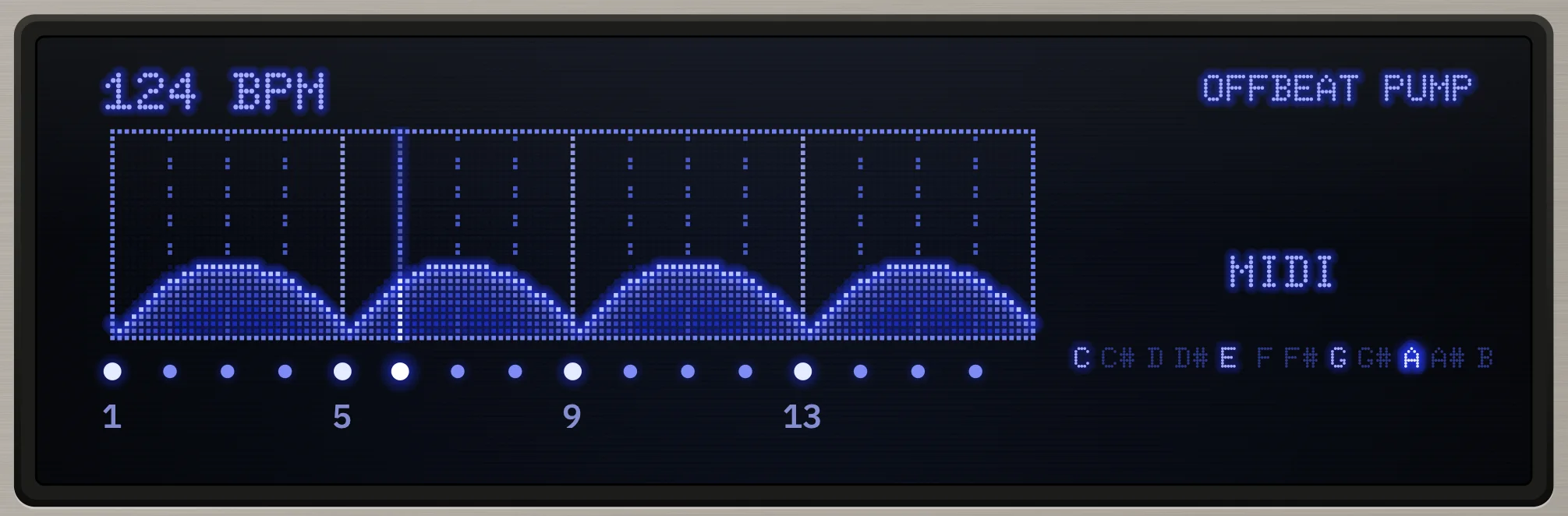
Sixty resonators, one on every semitone from G#2 to G7, ring along with the tail. KEY lets through the notes of your root and scale and holds back the rest. LOCK decides how firmly, and the level stays where it was.
Root
Scale
C major: C, D, E, F, G, A and B.
Key · MIDI
Or just play it.
Switch KEY to MIDI and the notes you hold become the key, on any channel, with the sustain pedal holding them. Let go and the last chord stays until you play the next.
Engine
Three eras of digital.
Choose the character of three digital eras. GRIT adds grain; WOBBLE adds drift.
’89: the middle ground. 31.25 kHz and 14 bits.
Under the hood, the room runs inside a budget rack reverb’s converters: down to the era’s sample rate, band-limited and rounded to its bit depth on the way in and out, without dither, like the hardware. WOBBLE lets every delay line drift like an ageing clock.
Freeze · Tone · Mix lock
Hold the room.
Press FREEZE and the tail holds as it is: a minute later it has faded by barely 1.5 dB. Whatever plays meanwhile stays out of it, and GROOVE and DUCK keep shaping it, a pad that pumps in time for the breakdown. Automate it, and let go when the drop comes.
TONE shades the tail, from dark, where the highs die away in under a quarter of DECAY, to bright, where they last as long as the mids. DECAY itself stays put.
On a send? The padlock beside MIX keeps your level while you browse presets and compare A and B.
Front panel
Everything is on the front.
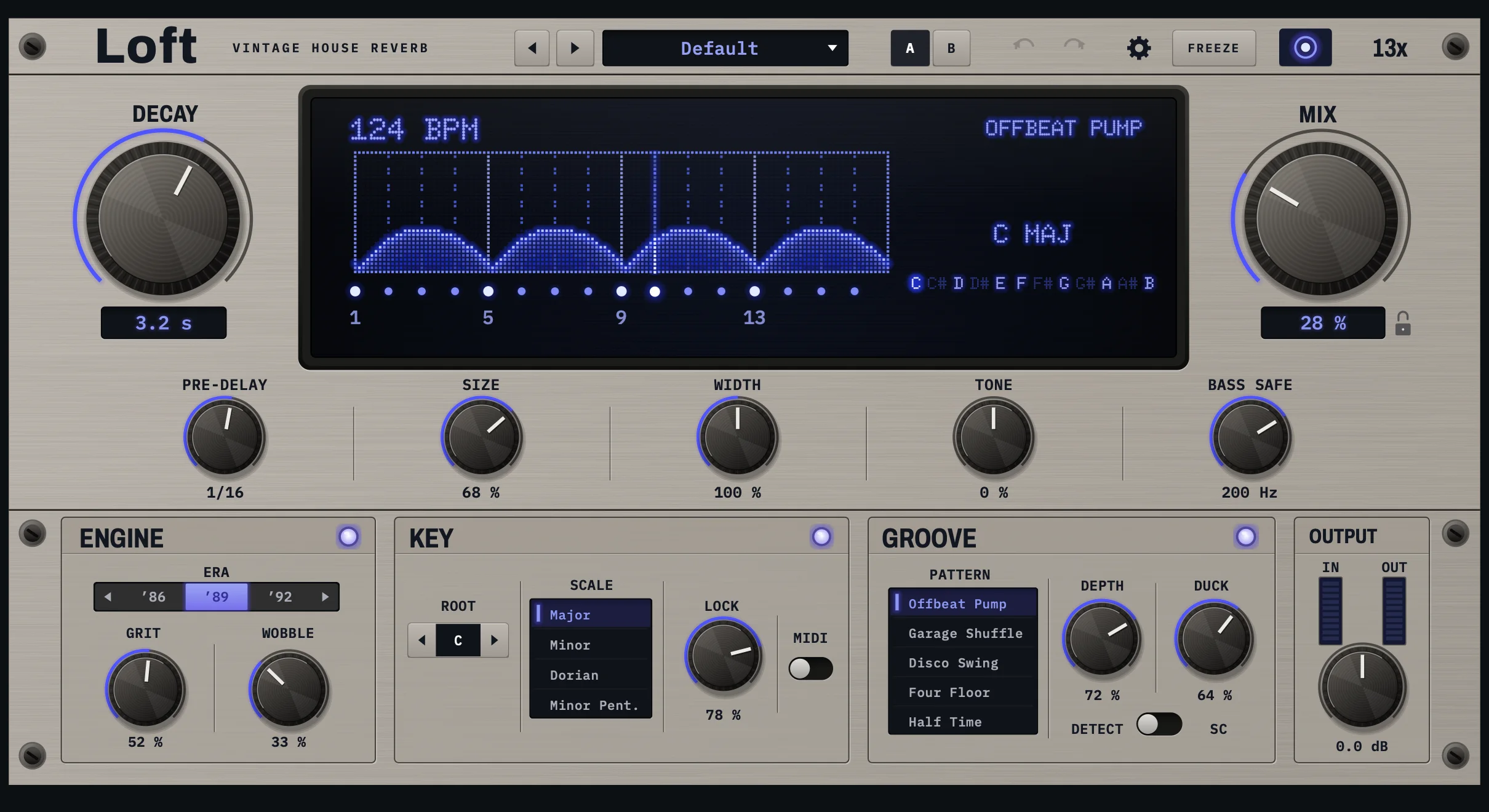
Every control, from left to right. Select a number on the unit or a control in the list to see where it sits and what it does.
Top bar
The room
Shape
Modules
Rear panel
Around the back.
No cables, the same connections. LOFT’s inputs and outputs are its buses in your DAW: mono to mono, mono to stereo or stereo to stereo, plus a sidechain and MIDI.
Mono or stereo, from the track or bus LOFT sits on.
Send a kick here and set DUCK to SC. Mono or stereo.
Route notes to LOFT and switch KEY to MIDI. Any channel.
Tempo and bar position from your DAW. GROOVE and the display follow it.
Stereo, or mono on a mono track.
Specifications
The datasheet.
Measured on the current development build, not estimated: the figures come from LOFT’s own test suite.
Reverb
- Structure
- 32-line feedback delay network
- Decay
- 0.2–20 s, measured within 10 %
- Pre-delay
- Off, 1/64 to 1/4 dotted, synced
- Size
- 0–100 %
- Width
- 0–200 %
- Bass safe
- 20–500 Hz, 24 dB/oct, mono lows
- Tone
- −100 to +100 %: highs (8 kHz) in 0.23–1.0 × DECAY
- Output
- −24 to +12 dB
Modules
- Engine
- ’86, ’89, ’92: 20, 31.25, 44.1 kHz
- Grit
- 8–20 bits, band limit to 40 %
- Wobble
- Up to ±1.5 ms per line
- Key
- 60 resonators, 104 Hz – 3.1 kHz
- Scales
- Major, Minor, Dorian, Minor Pentatonic, or MIDI
- Groove
- 5 patterns, host-synced, free-running when stopped
- Duck
- Detect or sidechain, release ¼ beat
- Freeze
- Holds the tail (−1.5 dB a minute); new input stays out
System
- Formats
- VST3, AU
- macOS
- 11 or later, Apple silicon and Intel
- Windows
- 10 or later, 64-bit, VST3
- Sample rates
- 44.1–192 kHz
- CPU
- About 1 % of one core*
- Latency
- 0 samples, as reported to the host
- Interface
- 75–150 %; A/B; undo; MIX lock
* Apple M4 Pro, 48 kHz, 128-sample blocks, default settings with every module on; 1.3 % with everything at its heaviest. Validated with pluginval at its strictest level and Apple’s auval.
Questions
Is LOFT free?
Yes. LOFT will be free to download, like AURORA and COLONY.
When does it come out?
In November 2026. Everyone on the list gets one email on the day.
Which formats and systems?
VST3 and AU, for macOS 11 or later (Apple silicon and Intel) and Windows 10 or later (64-bit). AU is macOS only.
What do I get when I sign up?
One email when LOFT is out. Tick the box and you'll also get occasional 13x news. Every email has a link to unsubscribe.
Coming November 2026
Be the first to get LOFT.
LOFT isn’t out yet. Join the list and you’ll get one email when it is: free, VST3 and AU for macOS 11 or later and Windows 10 or later.
Notify meFree · November 2026 · one email when it’s out
LOFT is software. The unit pictured exists only on your screen.
VST is a registered trademark of Steinberg Media Technologies GmbH. Audio Units is a trademark of Apple Inc.